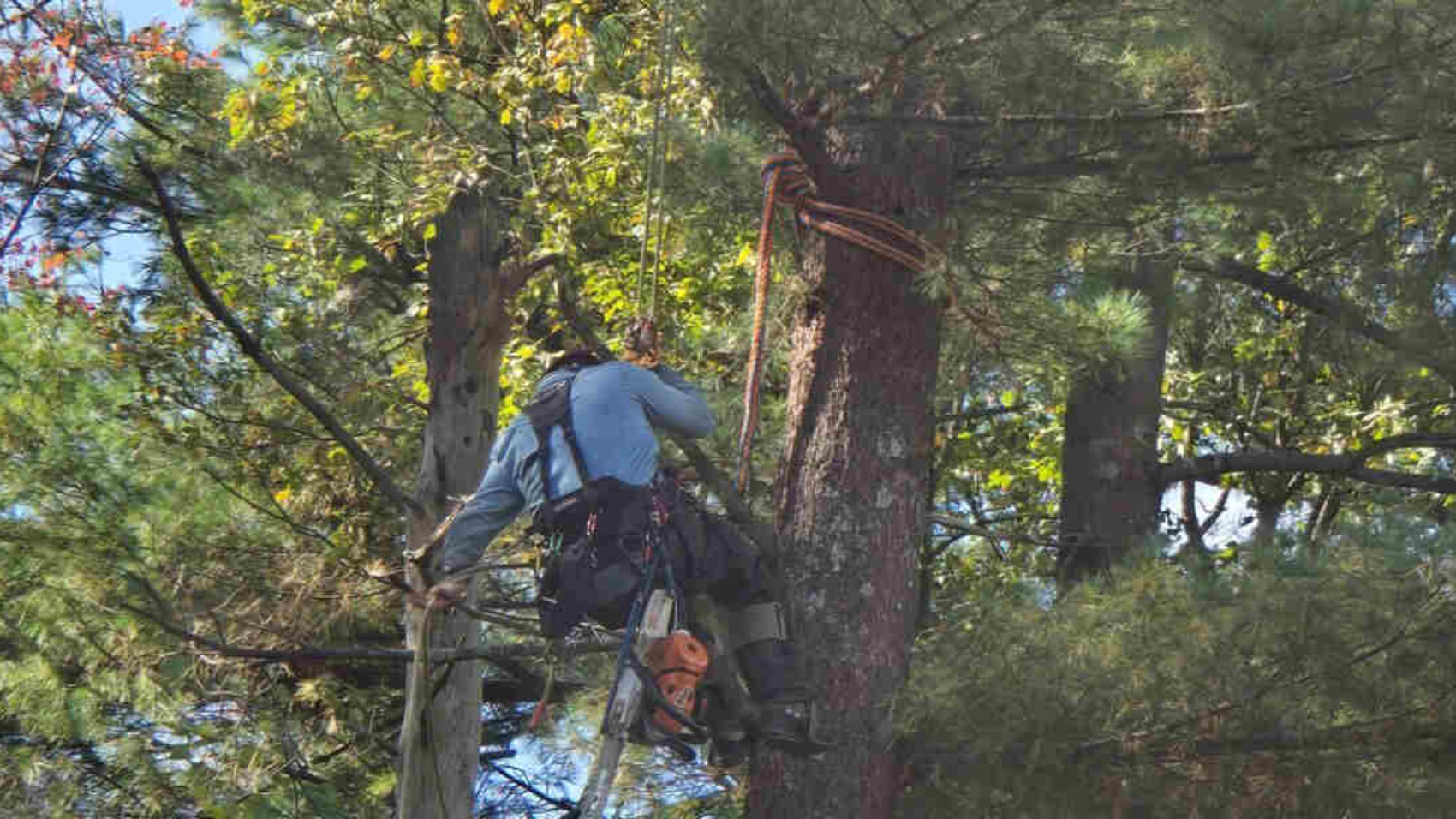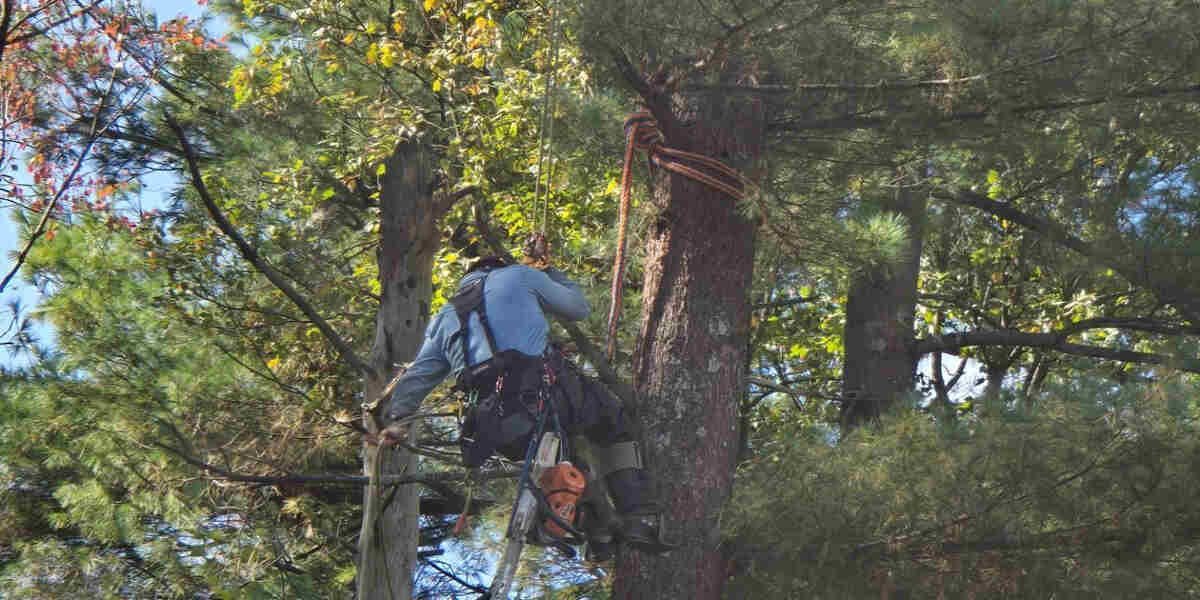
Although many trees grow tall and upright, many others grow at an awkward angle. Trees that lean naturally aren’t often hazardous, but if a once-straight tree begins to lean, it could be potentially dangerous. Knowing when and how to brace a large leaning tree can often restore the plant’s structural integrity, so a professional inspection is important.
Brooke Tree Service provides tree services in Wellesley, MA, including cabling and bracing. Our guide below explains how to implement effective structural support for leaning trees.
Are Leaning Trees Dangerous?
Some trees just grow skew, thanks to years of wind or similar environmental factors. However, suddenly leaning trees reveal a more urgent problem. If there are root or structural problems, any intense wind, heavy impacts, or oversaturated soil after the next downpour might easily cause that angled tree to topple!
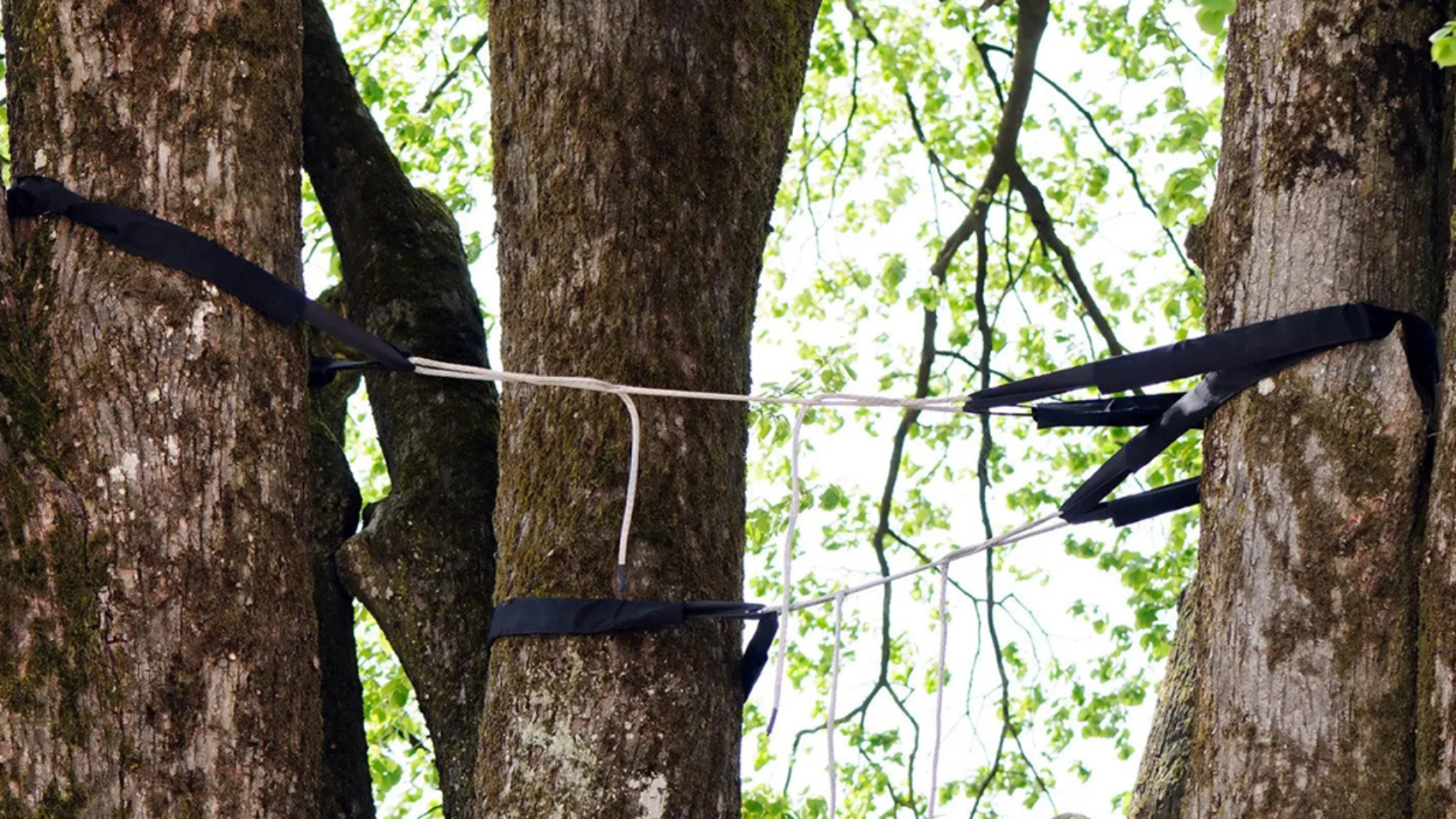
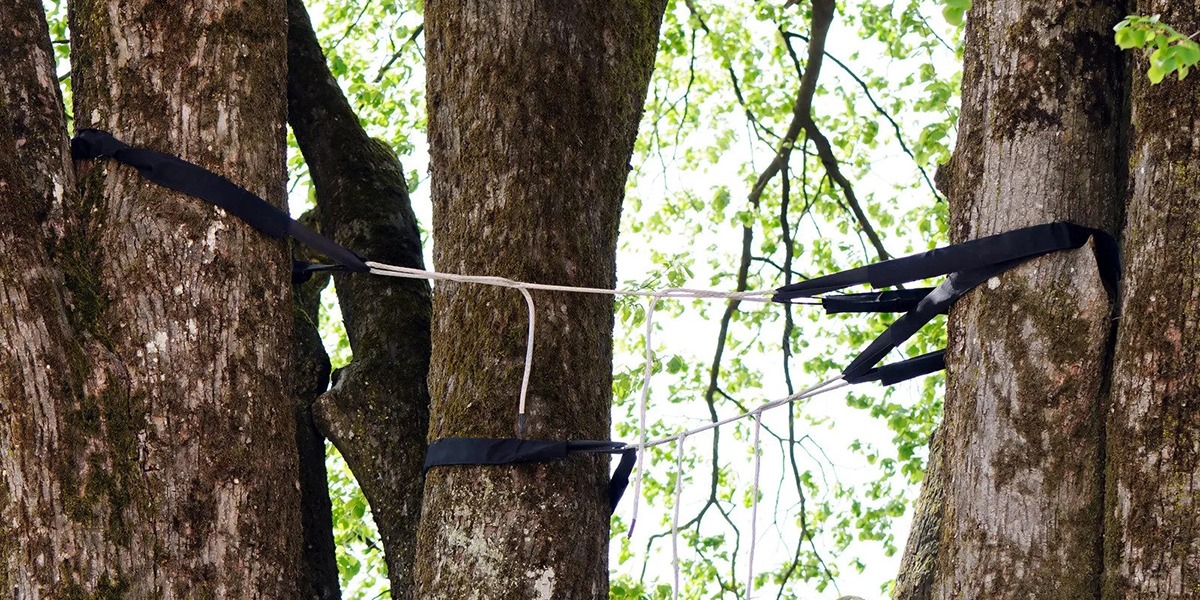
A tree that falls could cause substantial property damage and injuries. Straightening a leaning tree via tree cabling and bracing services brings the support it needs to stay upright.
Warning Signs Indicating the Need for Tree Stabilization
Before learning how to brace a large leaning tree, it’s helpful to understand when the service will become necessary. If insufficient sunlight and pest infestations have caused your tree’s structural problems, tree bracing and cabling may not be suitable solutions. On the other hand, cabling or bracing is a perfect solution if you see:
- Storm damage: Did your tree take on a lopsided appearance after a major storm? Broken branches or a fall is likely. Support rods will provide stabilization.
- V-shaped trees: Mature trees with two primary stems (a V-shape) tend to split and fall. Professional bracing and cabling services are a must.
- Horizontal branches: Are overextending branches growing horizontally? Their weight could put undue stress on the tree, which could fall over.
If you notice a large tree on your property has a noticeable slant, you should not wait to schedule bracing and cabling services. The longer you wait, the more hazardous the tree can become.
How To Handle Tree Bracing and Cabling
Wondering how to brace a large leaning tree safely? Tree care experts take these steps:
Step 1: Use stakes to brace the tree:
Insert three stakes about 18 inches into the soil. Pointing them toward the tree at a 45-degree angle.
Step 2: Straighten the trunk:
Is the soil around the tree soft enough? Correct the tree’s position with a bit of force. Gradually increase the force to prevent the trunk from uprooting.
Step 3: Anchor the plant in its new position:
Secure the tree in its new position. Experts use high-grade cables or straps attached to the stakes.
Turn to Brooke Tree Service for Professional Leaning Tree Corrections
Here at Brooke Tree Service, our licensed and experienced technicians know exactly how to brace a large leaning tree. Our tree care company uses industry-leading materials and techniques to ensure the healthy growth of plants in and around Wellesley, Massachusetts. If you need help cutting a leaning tree or bracing it with support rods, we’re your team.
Call (508) 613-5044 to speak with a Brooke Tree Service team member and schedule an estimate.