
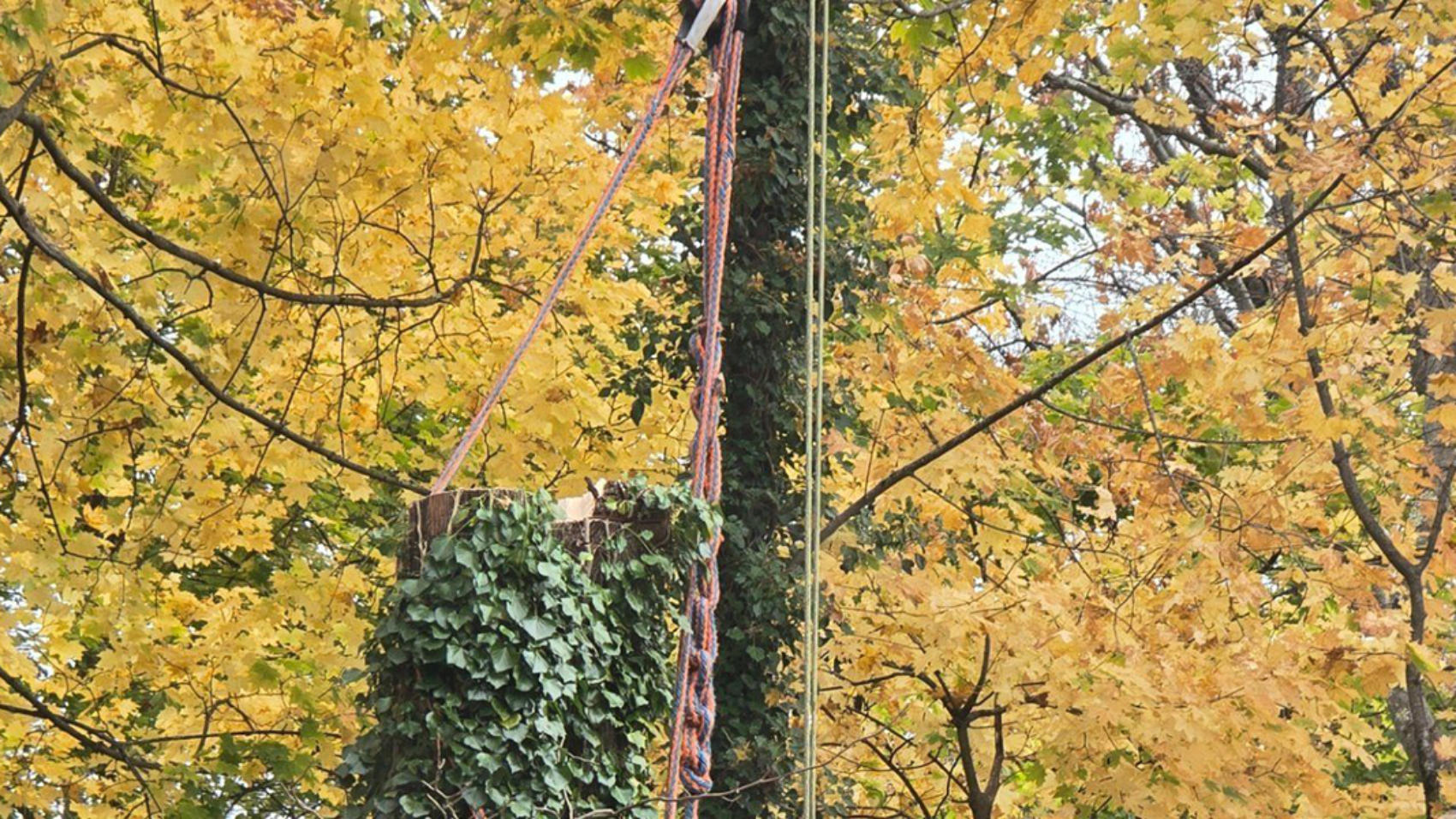
Massachusetts property owners are proud of the amazing spectrum of autumn colors we enjoy in New England. However, prematurely yellowing leaves on trees can be a troubling sign.
Why are my tree leaves turning yellow?
That’s a question we receive during the growing season often at Brooke Tree Service. As the leading provider of professional tree services in Millis, MA, we share the following information about the reasons property owners notice leaves that are having trouble.
Improper Watering
Overwatering can lead to waterlogged soil. That suffocates tree roots and interrupts efficient oxygen absorption. In turn, this leads to stressed trees with yellowing leaves and leaf drop well before autumn.
On the other hand, underwatering chokes off essential moisture, resulting in drought stress. In addition to yellowing, look out for leaves that curl or wilt. Test the soil above the roots with a screwdriver to determine if it feels compacted or excessively dry. Deep watering that focuses directly on the tree’s drip zone, can mitigate dehydration.
Nutrient Deficiency
Trees require balanced nutrition to maintain their vibrant green foliage. Common problems include:
- Nitrogen deficiency. This causes older leaves to turn yellow first, leaving newer growth green.
- Magnesium deficiency. This causes early leaf drop and deeper yellowing between veins.
- Iron deficiency (chlorosis). Excessively high soil pH or compacted soil limits iron availability. Look for green veins inside yellowing leaf tissue.
Soil tests can pinpoint specific deficiencies that support targeted treatments like fertilizer application or soil amendments.
Pests
Infestations by sap-sucking insects or other pests weaken trees and cause yellowing. Common Massachusetts pests include:
- Aphids and scale Insects. These pests extract nutrients, leaving behind yellow, curled leaves.
- Spider mites. Infestations create a stippled, yellow leaf discoloration.
Prompt expert treatment with insecticidal soaps or introducing natural predators can help restore tree health.
Diseases
Why are my tree leaves turning yellow? Our region sees some common tree diseases that cause discoloration:
- Fungal infections. Anthracnose and powdery mildew cause yellowing by disrupting nutrient uptake and photosynthesis.
- Bacterial pathogens. Invasive microorganisms cause wilting and leaf spotting in addition to yellowing.
Arborists treat diseases through proper pruning, improving air circulation, and applying fungicides as needed.
Environmental Stress
Environmental factors can heavily impact tree health, contributing to leaf discoloration:
- Soil pH imbalance. Out-of-range acidity hinders nutrient absorption at the root zone.
- Compacted soil. Damaged topsoil impairs root growth, water flow, and nutrient uptake.
- Temperature extremes. Large, sudden weather changes stress trees and cause yellowing leaves.
Arborists often amend soil with organic matter or mulch to alleviate compaction and improve soil conditions.
Call On Brooke Tree Service for Expert Arborist Services
Why are my tree leaves turning yellow? As we’ve discussed, yellowing leaves are a symptom of underlying health issues. Brooke Tree Service specializes in diagnosing and resolving tree health issues.
Take a look at our other posts for coverage of other common Massachusetts tree health topics, like understanding the reasons the top half of a tree has no leaves.
Contact Brooke Tree Service today at (508) 613-5044 for all your tree care needs.