
The process of removing an unwanted or hazardous tree leaves behind a common concern: the root system.
Do tree roots die after stump grinding?
With tree removal, grinding is a cost-effective and efficient way to eliminate waste material that extends above the surface. However, many people who hire our tree services in Natick, MA, ask us what happens to the roots left in the ground. It’s a valid concern, so read on for more from our Brooke Tree Service experts.
What Happens To Tree Roots After Stump Grinding?
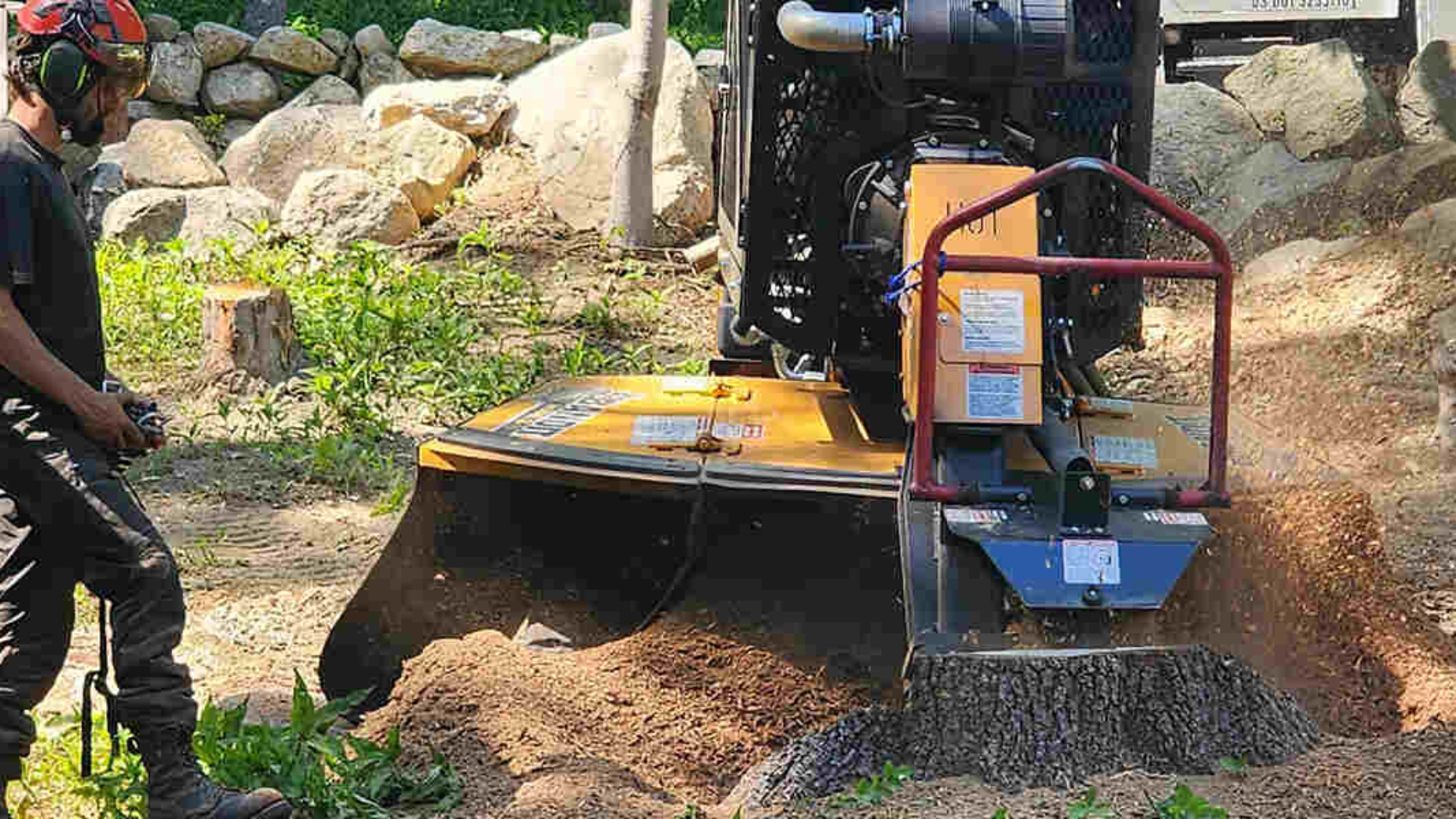
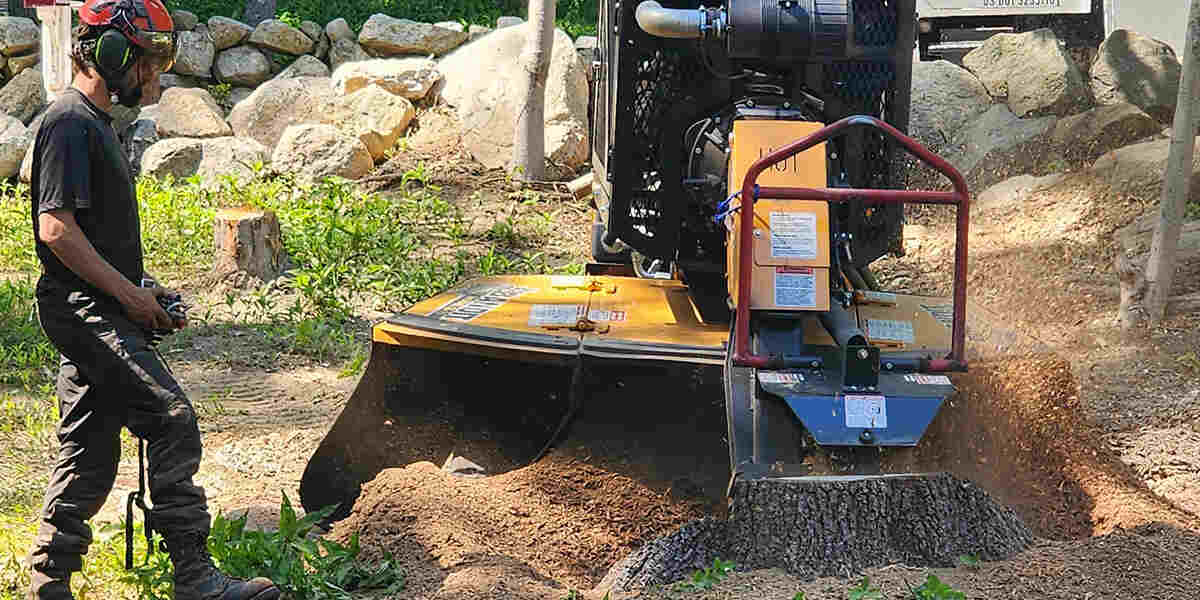
Stump grinding is always a highly efficient method for eliminating the above-ground remains of your tree. A qualified operator uses special equipment to simply grind a stump down into wood chips. The grinding takes the stump right down to just below the surface, but of course, this leaves the roots intact.
Do tree roots die after stump grinding? Most roots don’t die immediately, especially if they’re well-established. So, what happens?
Regrowth Potential
Some species – like poplars, maples, and elms – have high regrowth potential. Severed roots from these species might easily sprout new shoots, leading to unwanted regrowth.
Generally, coniferous species like pines and spruces do not regenerate after stump grinding.
Root Decomposition and Soil Settling
Roots decompose naturally if they don’t regrow. However, how long it takes for dead roots to rot away depends on factors like soil moisture, temperature, and the tree species.
Root decomposition is great. The process naturally releases nutrients back into the soil, serving as a natural fertilizer. Even if it takes several years for the roots of a large removed tree to decay, this nutrient release boosts the organic matter available in the soil.
On developed property, settling is another concern. As roots break down, the soil above them loses support. You might see depressions in your yard, which experts will need to mitigate by backfilling low spots with topsoil and replanting vegetation.
Pest Attraction Is a Key Concern
Decomposing roots often attract native pests like termites, carpenter ants, and beetles. If these wood-destroying insects colonize rotting roots, they can migrate to nearby wooden construction materials in houses and other buildings.
Professional pest control measures can help contain this risk after stump grinding.
Root Removal Methods
Do tree roots die after stump grinding? If that’s a concern for you, consider these root removal methods instead:
- Excavation. Dig out roots. It’s labor-intensive and more expensive.
- Chemical treatments. Applying herbicides can prevent regrowth, but you’ll want expert caution to avoid harming the environment.
- Natural decay. Allowing roots to decompose naturally is the least invasive method but requires patience.
Choose Brooke Tree Service for Expert Stump Grinding
For professional tree care that includes stump grinding and root management, property owners in Natick, MA, count on Brooke Tree Service. Whether you’re dealing with regrowth potential, managing nutrient release, or averting pests, we can help.
Do tree roots die after stump grinding? What’s the role of an arborist in tree health and maintenance? Call us at (508) 613-5044 to find out more or to schedule comprehensive tree care services in Natick, Massachusetts, and beyond!